 




 |
| |
|
| |
| |
|
North
East
Speedway
|
| |
 |
| |
|
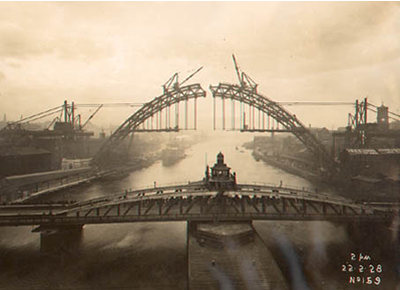
The Tyne
Bridge under construction 1927/1928
|
| |
|
| |
History
Of Dirt Track Racing
On Tyneside |
|
|
Brough
Park
|
| |
 |
| |
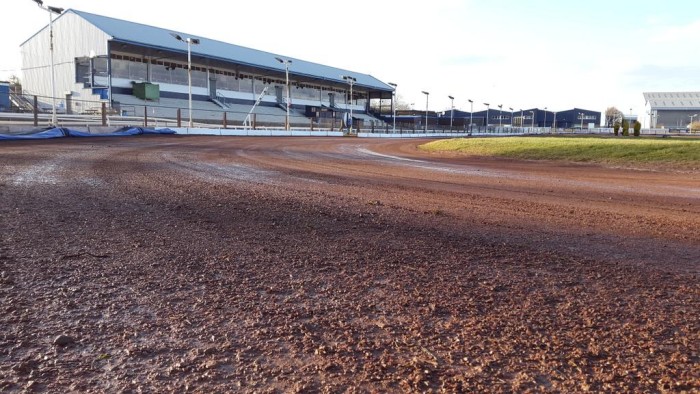
| Brough Park aka Newcastle Stadium in 2015 |
| |
 |
| |
 |
| |
 |
| Courtesy of
www.newcastlespeedway.net
|
| |
|
Relatively
Longish fast straights and tight turns are what defines the Newcastle Track.
Riders have to shut off going into the turns and pick up the revs on the corners
coming out at full throttle. Easy eh? no not at all the front wheel lifts
at full throttle. A great track to watch skilled riders perform on but poorer
riders do not usually entertain us.
|
| |
|
| |
| |
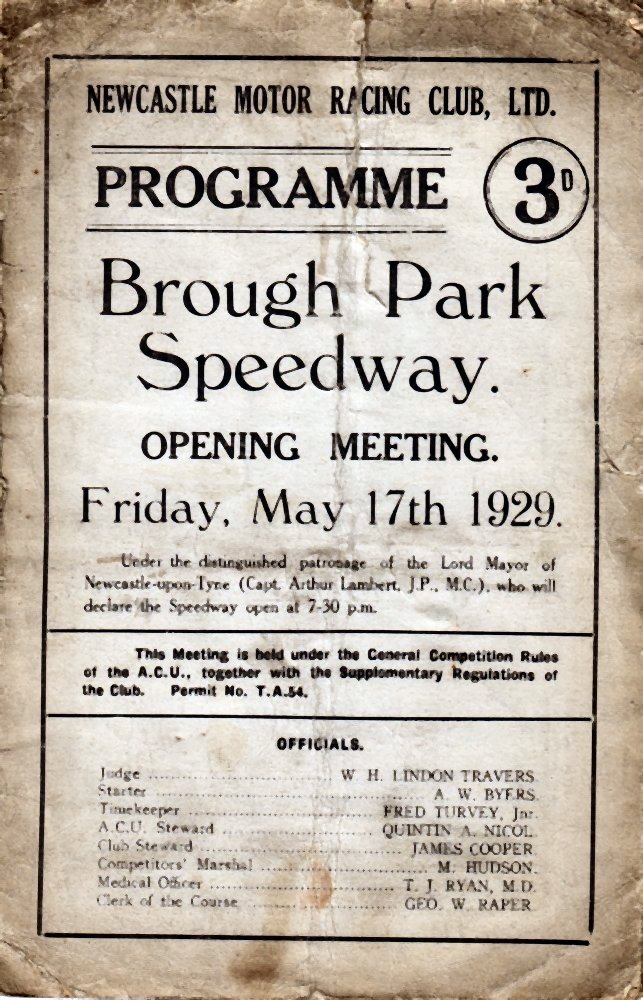
Brough Park's 1929
Opening Meeting Programme |
| |
 |
| |
|
Scan of the first speedway programme at Brough Park
|
| |
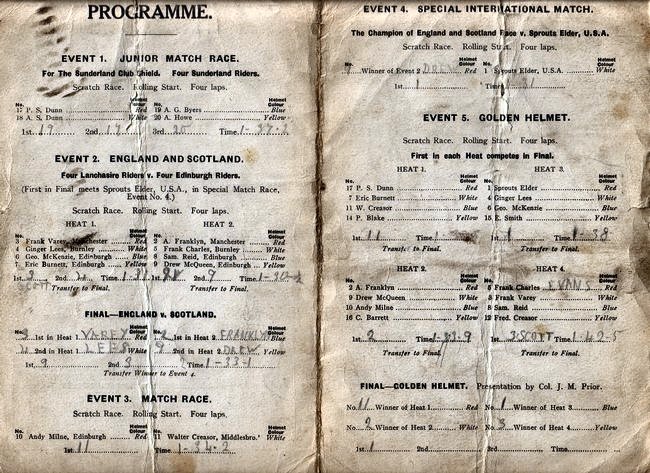 |
| |
| Inside the programme, the first ever race was won by
Sunderland's Gordon
Byers who appears on the Pre War years page on this site
Pre - War Part 1 |
| |
| |
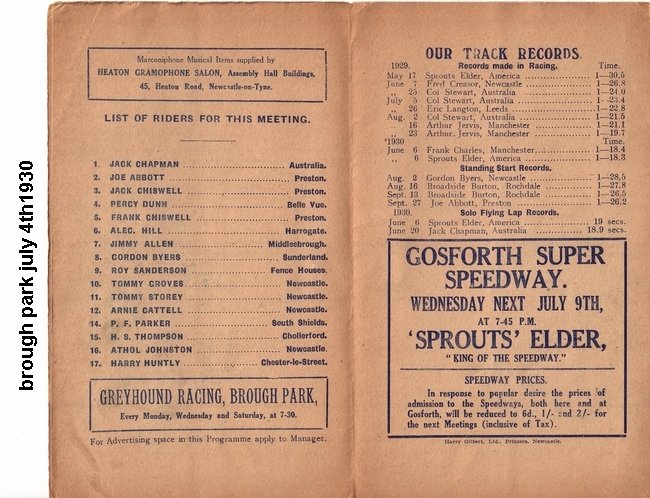
1930 The Last Programme Of The First Period
At
Brough Park |
| |
 |
| |
| The 4th July 1930 and the promotion pulls out
of Brough Park. Tyneside fans could still watch the sport at Brough
Park's rival track, Gosforth Super Speedway until 29th July 1931, when
it closed down too. Gosforth Speedway never reopened (its now an
ASDA store) whereas Brough Park did make a comeback in 1938. |
| |
|
| |
| |
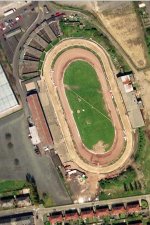
| Newcastle (Brough) & Sheffield's Owlerton
Circuits |
| |
 |
| |
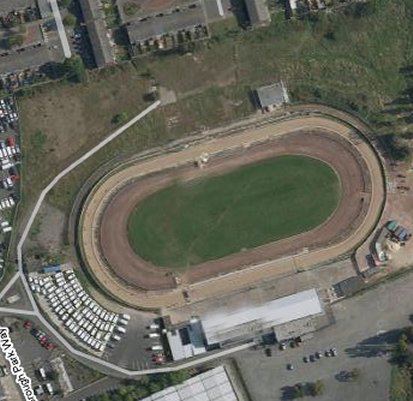
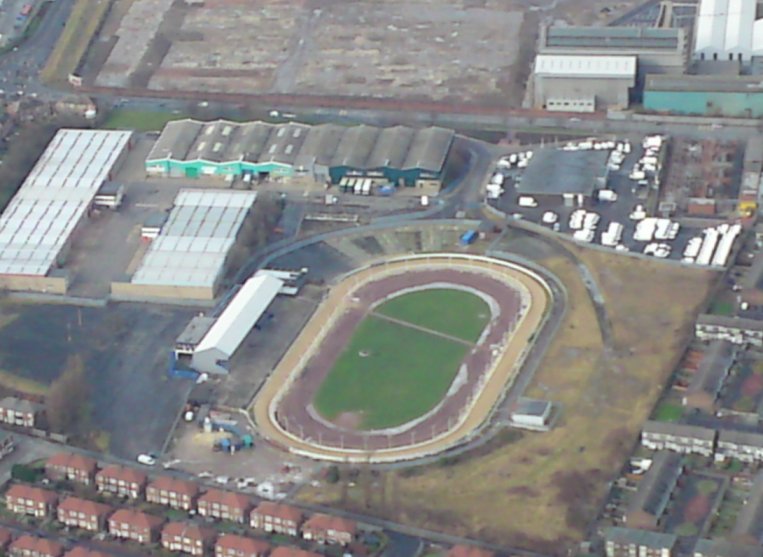
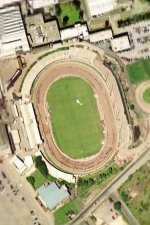
| Left: a shot of Brough Park from the air. The speedway track
is inside the greyhound track. Brough has long fast straights and tight
corners and although it has changed shape many times the tightness of the bends
remains as it's chief characteristic. The other shot is of Sheffield's
Owlerton track to emphasise how tight Brough Park is. |
| |
|
| |
| |
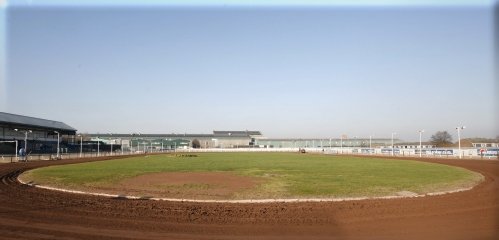
| Brough Park Stadium At Track Level |
| |
 |
| |
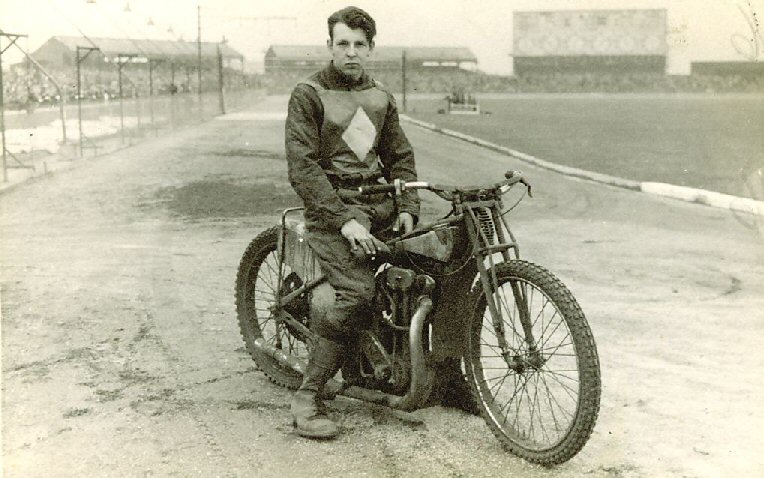
| This shot from the pits bend shows a panoramic view of half of
Brough Park. The old wooden stands on the fourth bend, the greyhound tote
board and the single story building on the far right, which was a bar and a
sometimes location of our track shop. All this is now gone and at Brough
in 2005, viewing is from the home straight only. This is 1947( Peter Lloyd
is the rider), the stadium was packed all the way around and yet 4 years later
Brough closed it's doors! Why? |
| |
|
| |
 |
| |
 |
| |
|
Above
: The “Jewel” in the North, home to both modern Newcastle teams, the
"Diamonds" and the "Gems."
Brough Park Stadium, The Fossway, Byker, Newcastle upon Tyne.
The Gems have been withdrawn from The 2005 Conference League. Newcastle's only
surviving speedway venue is in the east end of the city in the suburb of Byker.
This eastern part of the city has undergone constant change since its
urbanization began in Victorian times in 1865. Byker became famous for chemicals,
high quality glass and pottery, the Maling pottery was close by.
|
| |
|
| |
| |
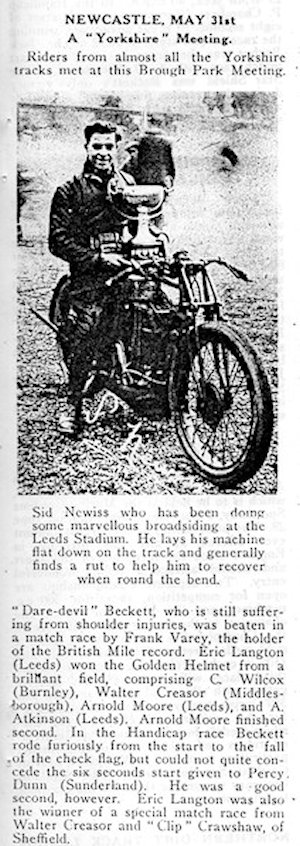
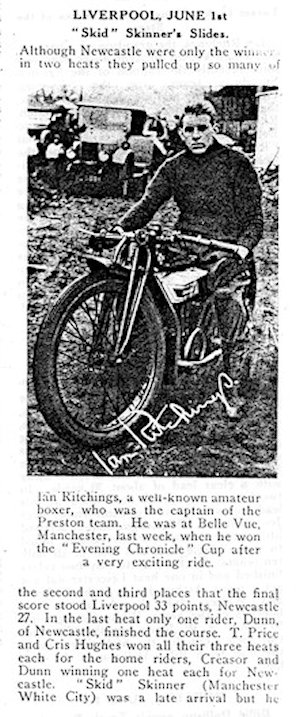
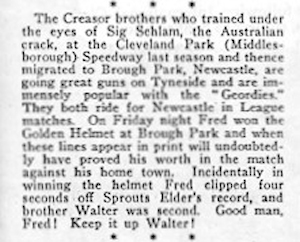
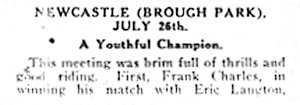
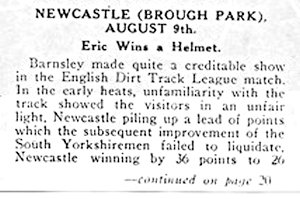
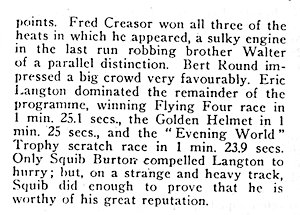
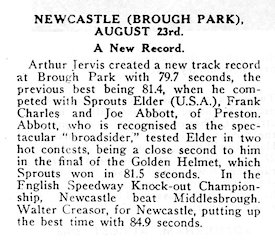
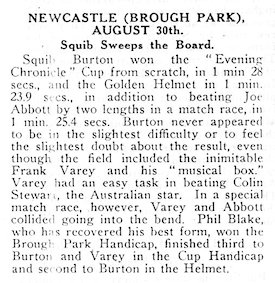
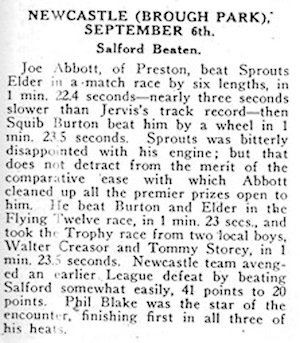
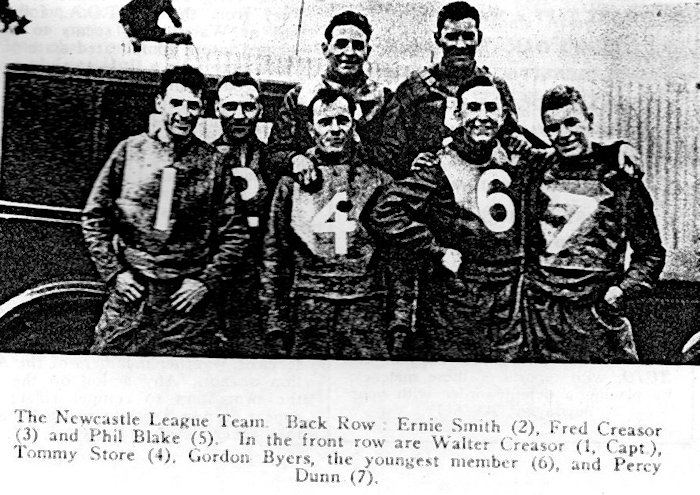
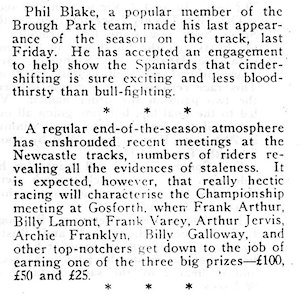
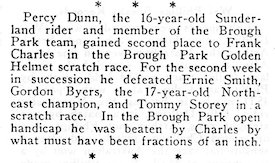
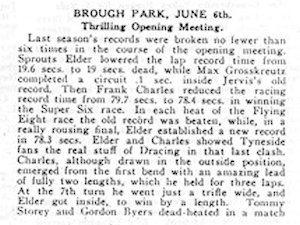
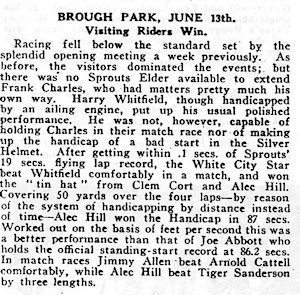
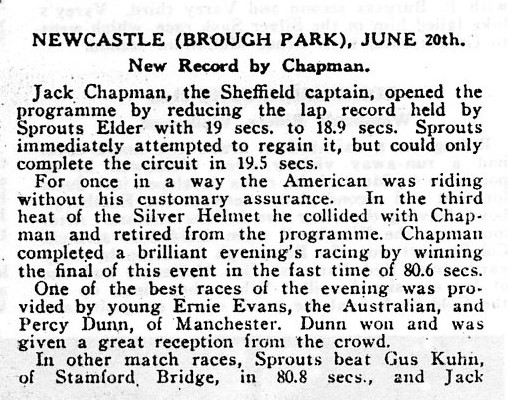
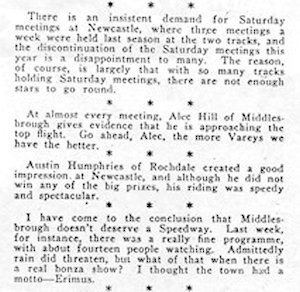
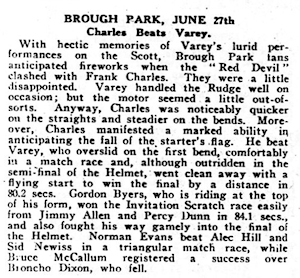
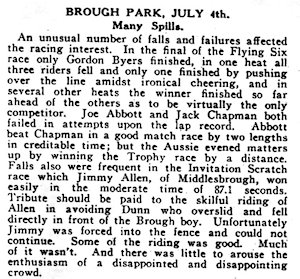
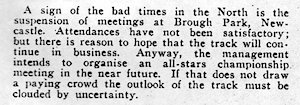
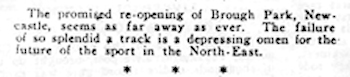
| The "Auto" Magazine
1929 |
| |
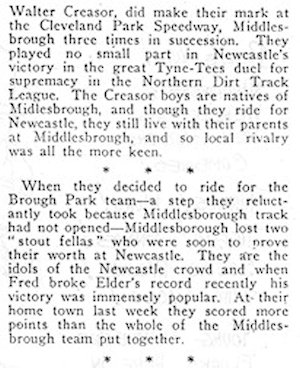
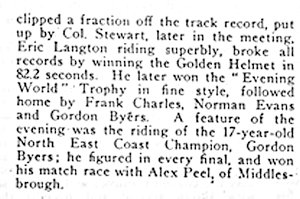
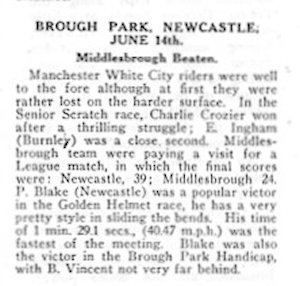
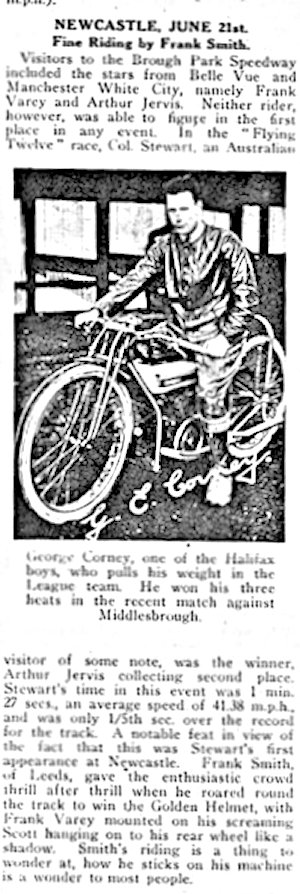
| Newcastle Match Reports |
| |
   |
 |
 |
 |
 |
| |
  |
|
 |
|
|
| |
 |
| |
 |
| |
 |
| |
 |
| |
 |
| |
| |
| |
| |
| |
| |
| |
| |
| |
| |
|
| |
| |
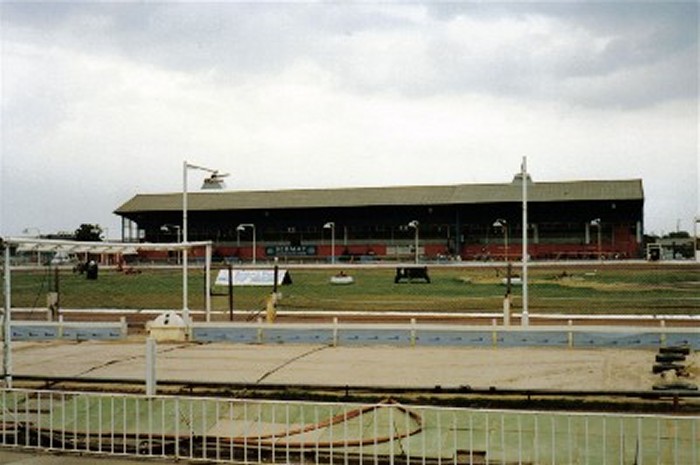
| The Old Back Straight Grandstand |
| |
 |
| |
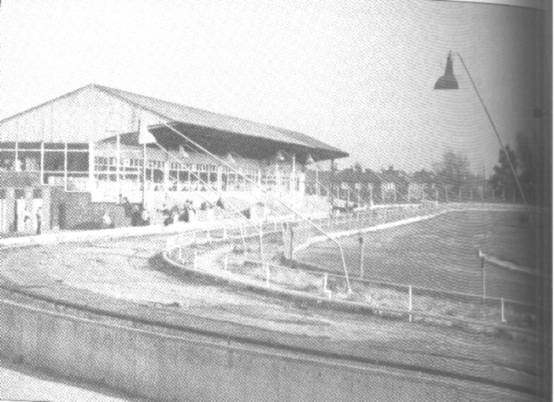
| If you have only started watching speedway in
the last few years. You will be interested to see the impressive grandstand and bar which once occupied the back straight
site. Fans could watch from either straight and terracing on the
bends. |
| |
| |
 |
| |
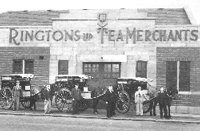
| Local Tea Company
Ringtons, probably supplied fans with a cuppa at Brough? Ringtons
Tea Head office was built in Byker in 1926 and is still there, Ringtons is within
ear-shot of the roar of the speedway. CA
Parsons engineering works was built within sight of Brough Park and supplied the
world with turbine generators, the fastest boat of the Victorian era, the Turbinia and even complete power stations. |
| |
| |
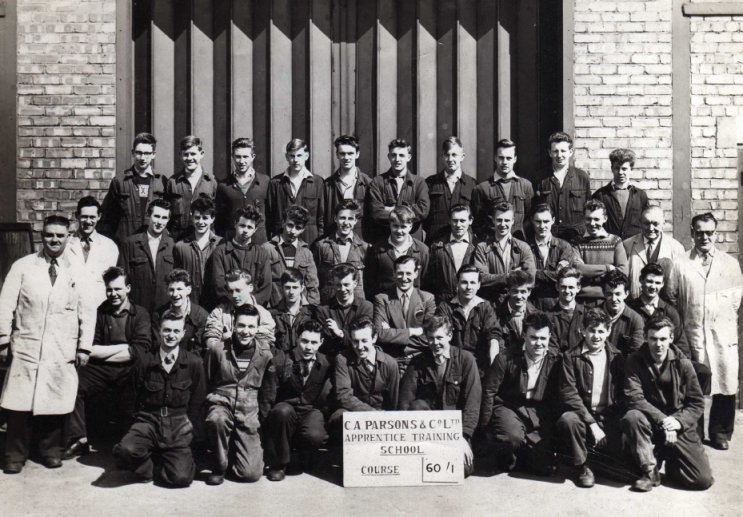
| Mike Watkin's Apprentice Training School
Picture 1960 |
| |
 |
|
Courtesy of Mike Watkin |
| |
|
This is Mike Watkin's
apprentice training school group taken in 1960. Because Parsons is so
close to the speedway we think you may recognise some of the lads from Parsons. Let me know
if you do
John |
| The Romans settled here
2000 years ago. The Speedway stadium is fringed on two sides by "The
Fossway" and "Roman Avenue", two Roman Roads and the ancient
monument of Hadrian's Wall ended close by in
Wallsend.
The Romans and the Ancient
Brits may even have staged chariot races around the site that is now Brough
Park, weather permitting of course! Centuries later the Vikings
invaded the north of England (please! the real Vikings, not the Hull variety).
The Vikings gave the district it's name "Byker" No they didn't have a
glimpse of the future of Bikers racing around Brough. |
|
Byker
gets it's name from
"By Kiarr",
A Viking village (a "By")
near a "kiarr"
(a Marsh). Kiarr was the Viking word for marsh, The nearby district of Walker
"Wall
Kiarr", means marsh or 'Kiarr' by
the wall So Byker got it's name from the Vikings. |
| |
| In
1929-2004 the word Biker refers to someone who rides a motorcycle, Byker has a
very apt name for the home of Brough Park and a speedway track. |
| |
|
The stadium site was originally open parkland, then in 1910 a racetrack and grandstand
was built to cater for Horseracing, christened "Brough Park". Brough
Park is now 94 years old and has witnessed many changes. Greyhound racing
was introduced there by 23rd June 1928 and then "Dirt Track Racing"
was introduced on 17th May 1929. Since then it has been been used for show jumping, stunt
shows, rugby league, you name it, it has been tried at Brough Park but Speedway
and Greyhounds are what "Brough" is noted for.
|
| |
 |
| |
|
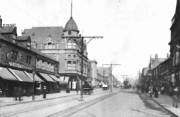
Above
Picture: Shields Road, Byker 1929
|
| |
| The
route for many fans to Brough in the early days of the 20th century, up
Shields Road, Byker. In 1929 trams ran in the middle of the road. At
stopping points a small flag would show to order all other traffic to stop, thus
allowing the passengers safety whilst boarding and alighting. Did your
grandparents travel to watch the Speedway this way? |
| |
|
| |
| |
Earliest Picture Of Racing
At Brough Park |
| |
 |
| |
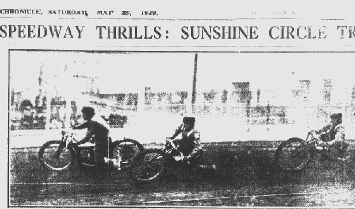
| This very early picture of the Brough Park
Track was taken on 24th May 1929 (just 7 days after the opening of the track) the riders names are unknown to me (at
present), they were competing for the Evening Chronicle Cup. Is there an older photograph of racing at
Brough? i.e. from the opener on 17th May 1929 if you have one please email me
John |
| |
|
| |
| |
| Openings, Closures & Fatalities |
| |
|
Brough Park has opened
and closed its doors to speedway many times since opening on 17th May
1929. It closed down 4th July 1930 and no speedway took place until 1938
when Johnnie Hoskins came to the rescue. It closed for the second time in
September 1939 due
to Adolf Hitler not being a fan of speedway!
The
third opening after the war was thanks to Johnnie Hoskins again. 1946 saw
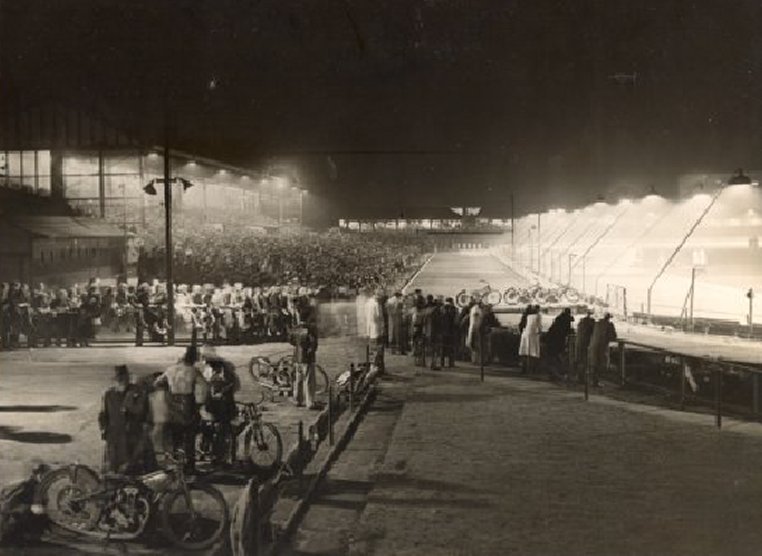
highs and lows. Crowds were often massive by modern day standards and 20,000+
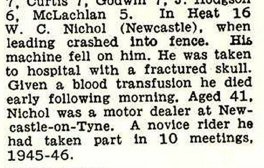
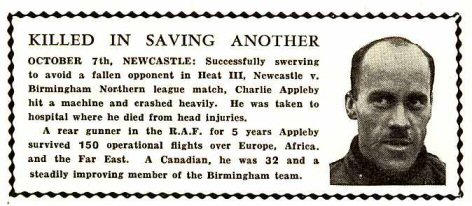
spectators has been reported on at least one occasion. Then double tragedy
struck. Bill Nichol (April '46 ) and Charlie Appleby (October '46) died after
crashing at Brough. Here are the sad accounts of their fatal crashes at
Brough Park: - |
| |
 |
| |
|
| |
| |
|
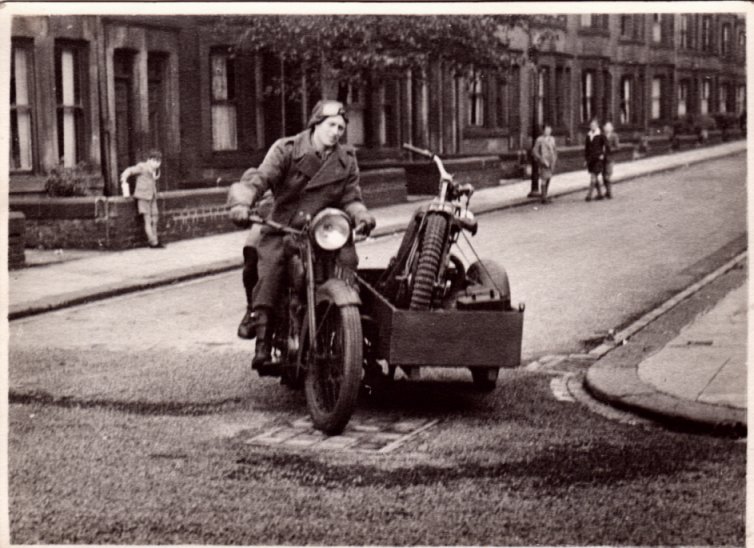
Bike Transport 1948 Style
John Hunter
|
| |
 |
|
Courtesy of John Hunter via Dave Rowland
|
| |
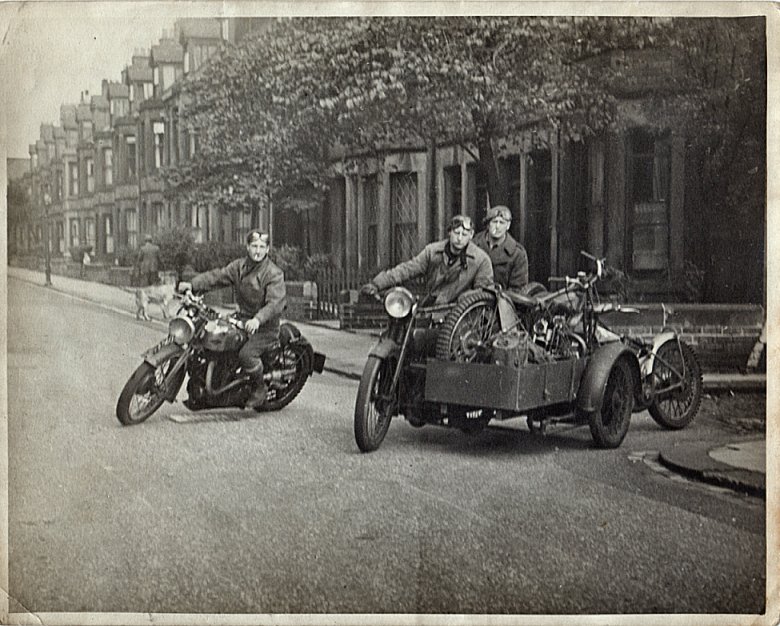
| 1948: Making the short trip from home (Wallsend)
to Brough Park for an evening's racing. Local rider John Hunter on the
combination with his mate on the back. The guy on the left was another
rider Stuart Robson. The combination was a1923 Harley Davidson. I
don't know what the other road bike was. The speedway machine in the
sidecar was I am told a Rudge with a JAP engine. The other speedway bike
has it's chain removed so the back wheel could revolve freely on the road.
It was common to see speedway bikes transported in this fashion before car
ownership did away with the motorcycle combination. |
| |
 |
|
Courtesy of John Hunter via Dave Rowland |
| |
|
Another trip in 1948 this time back from the
speedway to John's home in Wallsend. This time John Hunter is on the back
with his brother riding. If you have any 1948 programmes have a look for
John's name |
| |
| |
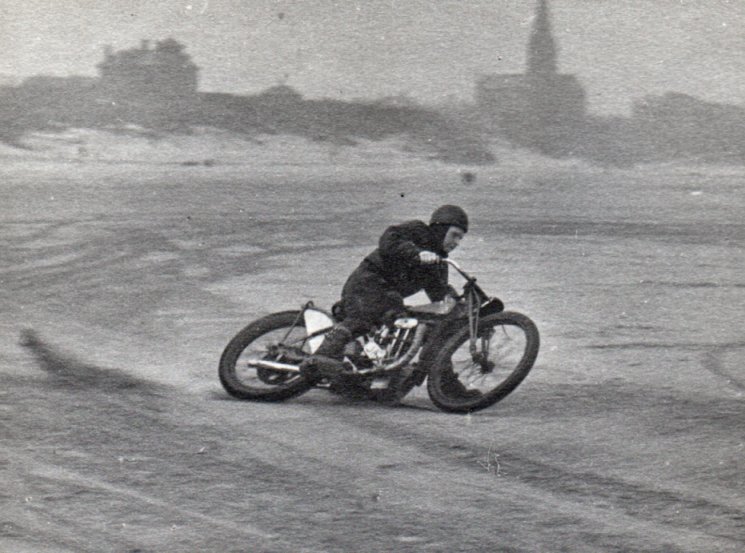
| The Long Sands, Tynemouth |
| |
 |
|
Courtesy of John Hunter via Dave Rowland |
| |
|
In 1948 there was no petrol for pleasure purposes.
John Hunter would get up early for a day at the seaside, with a difference.
He would put his speedway bike on the local coast train at his home station,
Wallsend and get it off again at Tynemouth. He would then push the bike
down to the Long Sands (Tynemouth Beach). He got in some practise, but
only if the tide was out! These photos were taken at 7.00am. He
would wake everyone up and attract the attention of the local police. The
cops would stop John, warn him about the frivolous waste of petrol and tell him
motorbikes were banned from the sands. John would patiently explain that
speedway bikes ran on wood alcohol, not petrol and produce a copy of the beach
by-laws showing that there was no ban on bikes using the beach at that
time of year. He would then continue his session on the beach. |
| |
| |
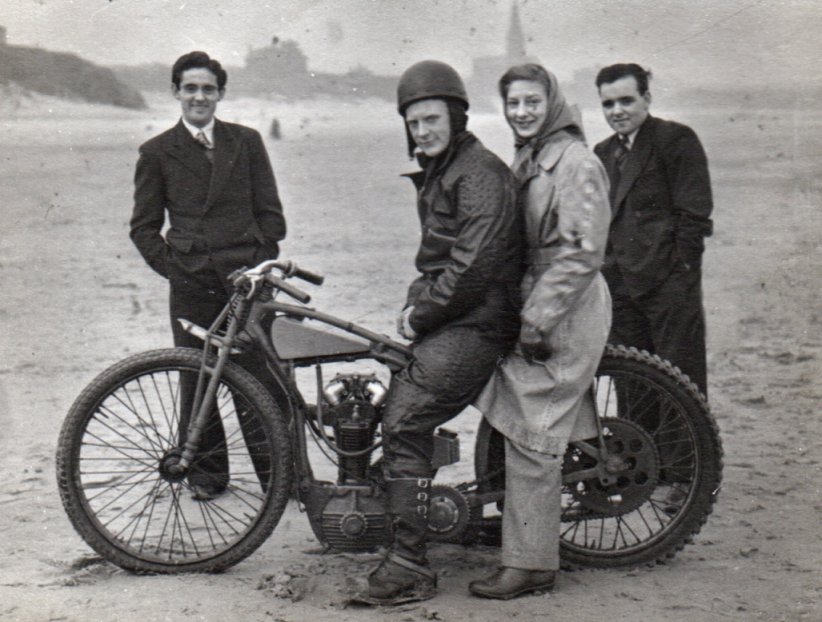
| John & Friends On Tynemouth Beach |
| |
 |
|
Courtesy of John Hunter via Dave Rowland
|
| |
|
1948: John, his sister and
two friends pose for this photo during one of the early morning sessions on the
beach at Tynemouth. The modern day Tynemouth inhabitants would have a fit
if they were woken by speedway bikes at dawn. |
| |
|
| |
| 1949 TeammTransferred To Glasgoww&
Middlesbrough TeammTransferred To Brough Park!! |
| |
|
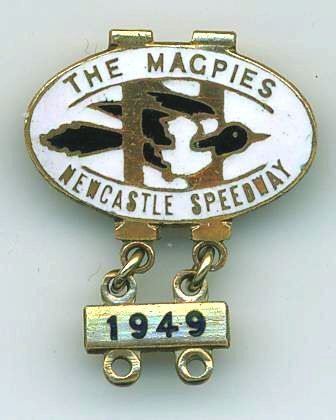
1949
saw the Johnnie Hoskins promotion move almost our entire team to Glasgow Ashfield and
the Middlesbrough team move into Brough Park. The new promotion was made up of: Harry Whitfield, Arthur
Atkinson and Stan Greatorex. They changed the nickname from
"Diamonds" to "Magpies", for the 1949 season only. |
| |
 |
| |
|
The
name "The Magpies" was by now the sole property of NUFC so the speedway team reverted
back to "Diamonds" for 1950. So the excellent badge shown above
had date bar loops on the bottom of the 1949 bar which were immediately
"surplus to requirements". Various management changes took place and
the track closed for the 3rd time at the end of the 1951 season. |
| |
|
| |
| |
|
Midget Car Racing
|
| |
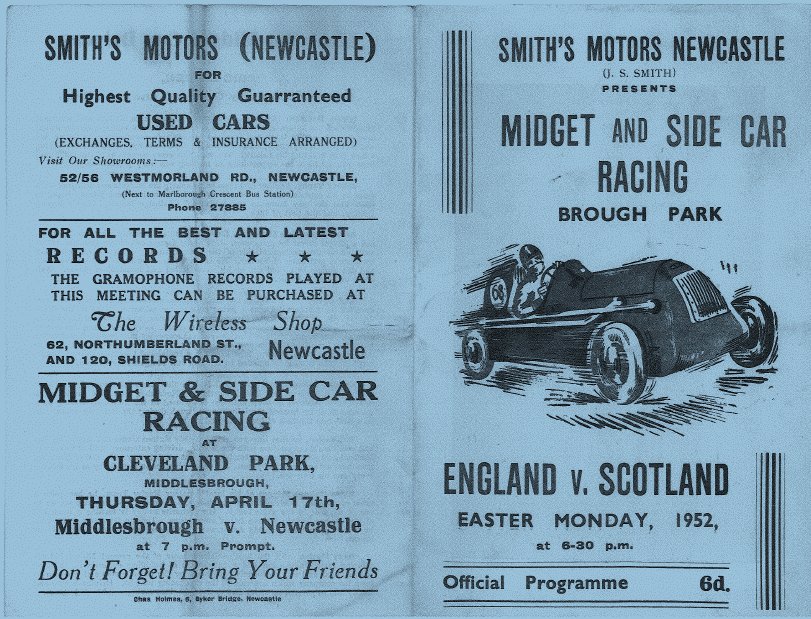
| Speedway may have been missing from Brough
Park during most of the 1950's but the stadium heard the roar of racing machines
in 1952, at least. Midget cars came to our track. |
| |
 |
| |
| |
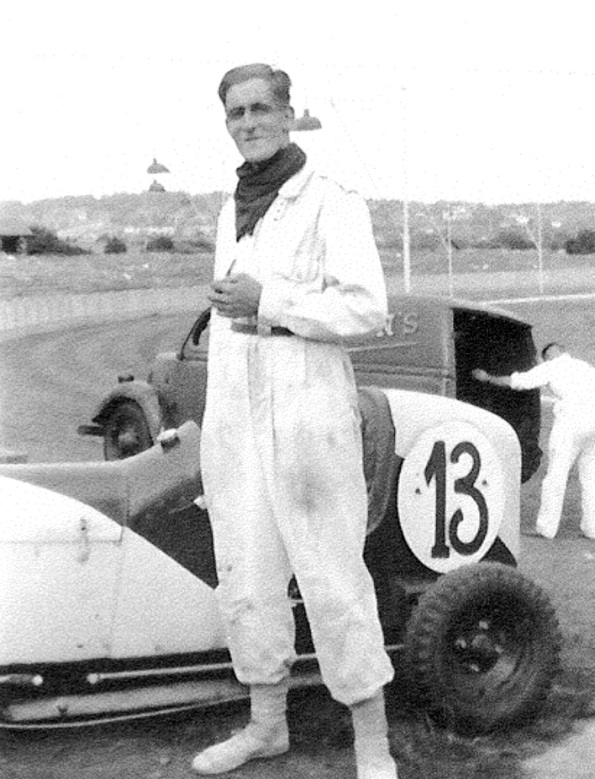
| Wilf Davis With His Midget Car |
| |
 |
| |
|
This is Wilf Davis with his Midget Car. The picture (not taken at Brough)
and programme from Brough Park come to us via David Kipling and are from Wilf's grandson
James Gould
|
| |
|
| |
| |
| 1960s The Mike Parker Era |
|
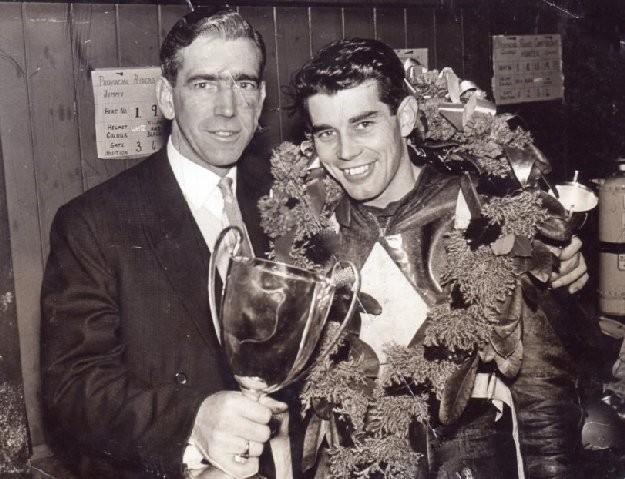
Mike and Ivan |
| |
|
Speedway
fans had to wait until Mike Parker (in partnership with Reg Fearman) came along in 1961 for the 4th opening of the
track. Promoter Mike Parker and New Zealand rider Ivan Mauger
steered Newcastle to the Provincial League title in 1964. Mike Parker moved on in
1969 and the name Hoskins was back in control. This time it was not
Johnnie but his son Ian who promoted speedway at Newcastle in 1970.
Newcastle wanted to drop to the second division in 1971 but the stadium owners
did not like that idea and Brough closed for the 4th time at the end of 1970
with the staging of the Northumbrian Open Championship, won by ex-Diamond Ole
Olsen. |
| |
|
| |
| |
1975-1984 The
Ian Thomas Years |
| |
 |
| |
|
The
fifth re-incarnation at Brough came in 1975 when Ian Thomas and George Graham
gambled that they could make a success of speedway on Tyneside when others had
failed. Brian Larner replaced George Graham in 1976 and the Diamonds
embarked upon the most successful spell in Brough's open and shut history.
They were league champions in 1976 thanks mainly to the riding of Tom and Joe
Owen. The blackest spot in this period came in 1978 when young rider Chris Prime
became the third rider to lose his life after crashing at Brough Park.
The
Diamonds continued to dominate and won back to back championships in 1982 and
1983.
Robin
Stannard joined Ian and Brian as promoter for the ill-fated venture into
the 1984 first division. Lower support and higher costs forced the 5th
closure at the end of 1984.
|
| |
|
| |
| |
John Turner (1986) &
Eric Stead
(1987) |
| |
| Promotional Messrs.' Turner and Stead both
managed to run things for only one season! Turner brought speedway
back for the 6th time but by the end of 1987 the sport was lost for the
6th time. |
|
The 6th opening in 1986, under John
Turner's control saw the Diamonds become the Federation Specials. |
|
| |
| |
| Barry Wallace & Richard Bailey Spectake
Ltd 1989 |
| |
| 1988 and the doors were closed but Barry and
Richard were at the helm for 1989's re-opening, the 7th spell since
1929, if I have counted correctly! In 1991 the promotion team
changed. Richard Bailey and Bill Reay headed a large group, safety
in numbers? |
| Barry Wallace and
Richard Bailey and then in 1991 Bill Reay and Richard Bailey became the heads of
the speedway management committee. This, the 7th attempt to keep the sport going
at Brough, was marred in 1992 by a fatal crash when Wayne Garratt became
the 4th speedway rider to die after an accident at the track. |
| |
| |
|
| |
| |
| 1994 Richard Bailey & Trevor Barnes |
| |
|
Trevor " Bunter" Barnes joined (the ever present in this period),
Richard Bailey as promoter in 1994 then a consortium took over from
Richard Bailey under the name Whiteload Ltd. Members were Dave Rowland, Brian Havelock, Bunter Barnes
and George English jnr, but at the end of 1994 the Brough Park faithful were
without their sport once again as the club closed for the 7th time as Stadium
owner Kevin Wilde decided he did not want speedway at Brough Park.
At the end of
1994 the shutters went up for the 8th time. Things are changing
and each time a promoter applies to run at Brough Park there is an ever
increasing risk that the application may be turned down. So this
trend of opening for 2 or 3 seasons and then closing has to be halted.
We could do with local men running things whose hearts were in Newcastle
Speedway and they should be able to take the rough with the smooth and
not close down after a bad year, if they could help it. |
| |
| |
| 1997 George
English & Dave Rowland |
| |
 |
| |
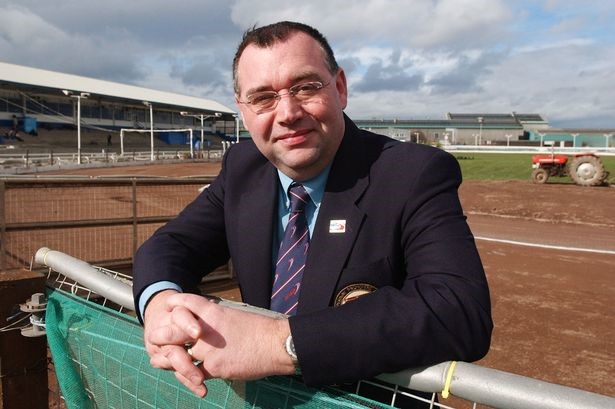
| Local men George and Dave are life long
Newcastle Diamonds fans. They were exactly what the doctor ordered
for the ailing sport at Brough Park. |
|
We
then had to wait until 1997 for the reopening (8th time if I am counting
correctly, probably not!). George English and Dave Rowland on behalf of
Newspeed Ltd., brought the bikes back to Brough, they were later joined
(2000) by local builder, Darryl Illingworth. Dave "retired" from
the promotion team in 2003 and Barry Wallace replaced him for the 2004 season.
Season 2009 was
the clubs 80th birthday the management team is now Darryl Illingworth, George
English, Joan English, Alan Hedley, Andrew Dalby and Richard Juul. This
the 8th session is also the longest spell of speedway at Brough (13 years
without a break) Update... it is now 2014 and our longest unbroken spell is now
17 years!
|
| |
| I used to consider Ian Thomas to be our most
successful promoter but Ian ran things for only 10 unbroken years
whereas George English has been running the show for 17 years so I now
regard George as the most successful. |
|
Let's
hope the club never closes again and there are no more fatalities at the track. |
| |
|
|
Home: |
| |
|
| |
|
The contents of this website are © and should not be produced
elsewhere for financial gain. The contributors to this website
gave the pictures and information on that understanding. If anyone
has any issue or objections to any items on my website please email me
and I will amend or remove the item. Where possible credit has
been given to the owner of each item. |